
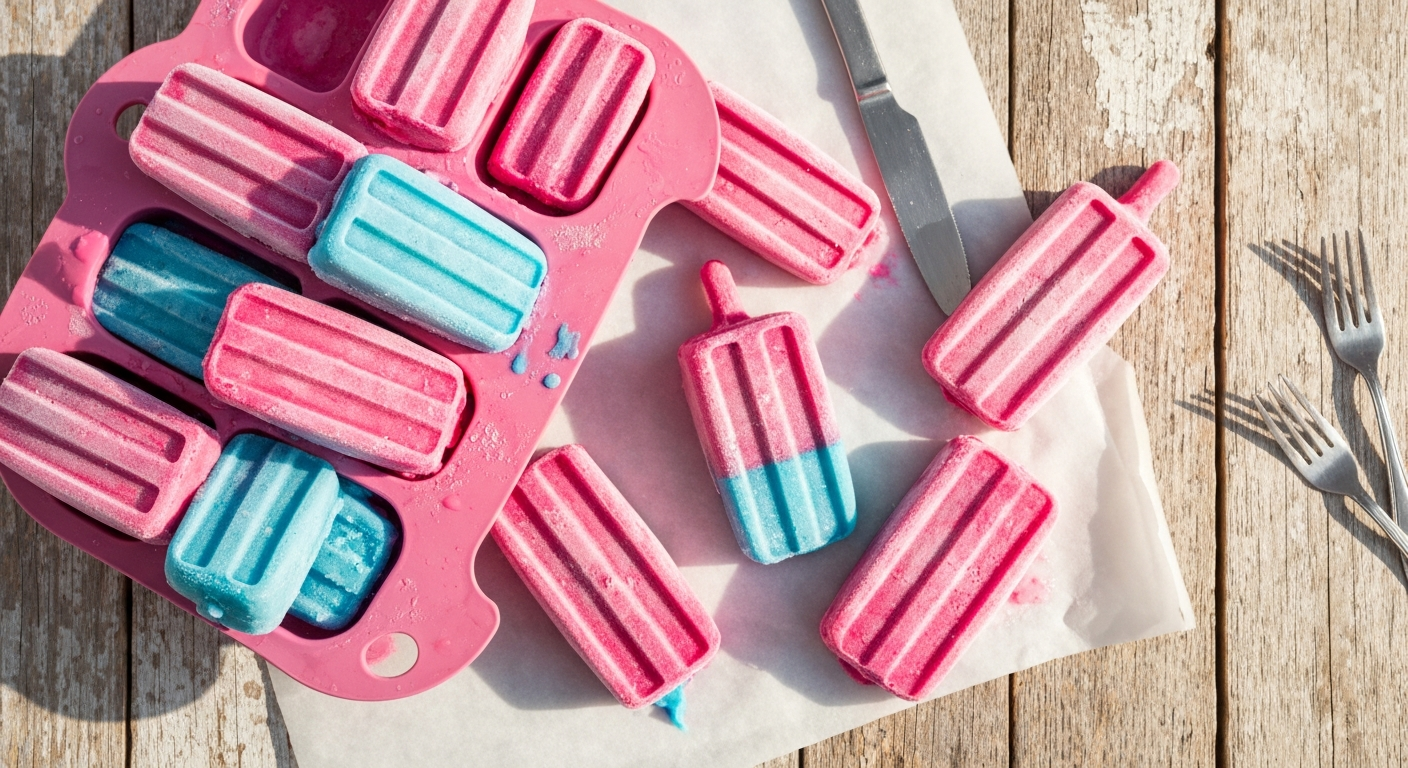
Summer’s here, and Nalla gets pretty warm after our walks. I wanted to whip up something super simple and refreshing for her, and these Berry & Yogurt Swirl Frozen Pupsicles hit the spot perfectly. They’re a breeze to make, and honestly, Nalla thinks they’re the best thing since sliced tennis balls.
Ingredients
- [ ] 1 cup (240 g) plain, unsweetened yogurt (xylitol-free)
- [ ] 1/2 cup (75 g) fresh or frozen strawberries, hulled
- [ ] 1/2 cup (75 g) fresh or frozen blueberries
Instructions
- Wash and hull the strawberries, if using fresh.
- In a blender, combine the strawberries and half of the plain yogurt; blend until smooth.
- Pour the strawberry-yogurt mixture into a separate bowl.
- Clean the blender, then combine the blueberries and the remaining half of the plain yogurt; blend until smooth.
- Spoon alternating dollops of the strawberry-yogurt and blueberry-yogurt mixtures into silicone molds or an ice cube tray.
- Gently swirl the mixtures with a skewer or small knife to create a marbled effect.
- Freeze for at least 3-4 hours, or until completely solid.
- Remove pupsicles from molds and serve.
Nalla’s verdict
Nalla absolutely devoured these! The first one was gone in about three enthusiastic licks, leaving a little pink and blue smear on her nose. She kept nudging the freezer door afterward, which I think is her highest form of praise. They were a bit messy, but totally worth it for her happy face.
Our Pick: Tools Used in This Recipe
What I actually use at home when cooking for Nalla:
- Mini Dog Bone Silicone Mold (18-cavity) — Bone-shape silicone — pops out frozen treats and baked biscuits cleanly. Dishwasher safe. The mold I batch-freeze yogurt bites in. View on Amazon
- VIVAGLORY Silicone Pet Food Mat (24"x16", waterproof) — Raised-edge silicone catches every spill and drip. Wipes clean in seconds — saves the floor from homemade-stew splash zone. View on Amazon
- IRIS USA WeatherPro Airtight Pet Food Container (25 lb / 33 Qt) — Foam-sealed lid + snap latches keep kibble and homemade-batch leftovers fresh for weeks. Wheels make it actually pleasant to roll out. View on Amazon
As an Amazon Associate, I earn from qualifying purchases. We only recommend gear we actually use.
FAQ
Can dogs eat plain yogurt, and are there any risks?
Yes, plain, unsweetened, xylitol-free yogurt is generally safe for dogs and can be a good source of probiotics. Always check the label to ensure no artificial sweeteners, especially xylitol, which is toxic to dogs. Introduce new dairy treats slowly, as some dogs can be sensitive to lactose, which might cause mild digestive upset.
How much of these frozen pupsicles can I give my dog?
Treats should always be given in moderation and make up no more than 10% of your dog’s daily caloric intake. For these pupsicles, a small dog (under 20 lb) might have half a pupsicle, a medium dog (20-50 lb) one pupsicle, and a large dog (over 50 lb) one to two pupsicles per day, depending on their activity level.
What are some good fruit substitutions for the berries in this recipe?
You can easily swap out the strawberries and blueberries for other dog-safe fruits. Good options include raspberries, sliced banana, or even a dollop of canned pumpkin puree (make sure it’s 100% pumpkin, not pie filling with added spices). Always ensure any fruit is fresh or frozen and free from seeds, pits, or cores that can be toxic or choking hazards.
How should I store homemade dog pupsicles?
Once completely frozen, remove the pupsicles from their molds and transfer them to an airtight, freezer-safe container or a resealable freezer bag. Stored properly, these frozen treats will last for up to one month in the freezer. This makes them perfect for prepping ahead for hot days!
Portion guide
- Small: 1 small pupsicle per day.
- Medium: 1-2 small pupsicles per day.
- Large: 2-3 small pupsicles per day.
Storage
Store frozen pupsicles in an airtight container in the freezer for up to 2 months.
Safety note
Ensure yogurt is plain, unsweetened, and xylitol-free. Some dogs may be sensitive to dairy; introduce new treats slowly. Berries should be given in moderation as part of a balanced diet.