
TL;DR: The biggest downsides of fresh dog food are cost (about $8–$10 a day for a 50 lb dog), fridge and freezer space, a short shelf life once thawed, harder travel, extra packaging and subscription friction. It’s only a full diet if labeled “complete and balanced” for your dog’s life stage. A fresh topper on kibble is the cheaper middle path.
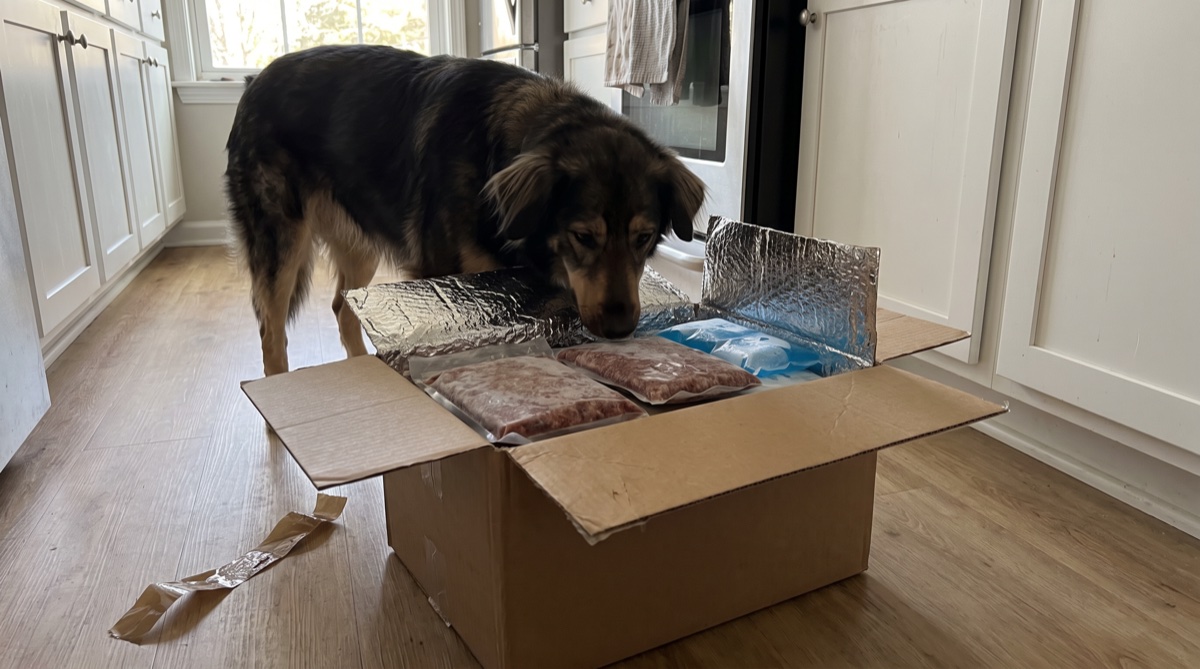
Fresh dog food subscriptions like The Farmer’s Dog, Ollie, Nom Nom and Spot & Tango sell a nice picture: gently cooked meals, real meat you can see, portions sized to your dog. Most of what you read about them is the upside. This post is the other column of the spreadsheet. I’m an engineer, not a vet, and Nalla is a roughly 50 lb shepherd mix, so I’ll use a 50 lb dog as the reference point throughout.
What are the downsides of fresh dog food?
There are eight practical downsides, and most of them are about money and logistics rather than nutrition. Here’s the short version, with who each one hits hardest:
| Downside | Who it matters most for |
|---|---|
| Monthly cost | Big dogs, multi-dog homes, tight budgets |
| Fridge and freezer space | Apartments, small or shared fridges |
| Short shelf life and handling | Busy households, homes with kids or older adults |
| Travel and boarding | Road-trippers, frequent boarders, pet sitters |
| Packaging waste | Anyone without good local recycling |
| “Complete and balanced” labeling | Puppies, large-breed puppies, dogs on mixed diets |
| Transition and stomach upset | Sensitive-stomach dogs, dogs switching fast |
| Subscription and cancellation friction | Anyone who just wants to try it once |
How much does fresh dog food cost per month for a 50 lb dog?
Expect about $8 a day for a 40–50 lb dog and about $10 a day for a 50–70 lb dog on a full fresh plan. Those are the averages in Nom Nom’s own price guide (May 2025), and your own quote moves with your dog’s weight, age and activity, so build a profile before you commit. A 50 lb dog like Nalla sits right on the line between those two brackets.
Run that over a year and the number gets real: $8 a day is about $2,920 a year, and $10 a day is about $3,650 a year, on food alone. Two more things can push it up:
- Shipping. Check whether delivery is included or charged per box before you compare prices.
- The intro discount ends. First boxes are often discounted, so your second invoice is the true price. Budget from that one, not the first.
If cost is the deciding factor, my dog food cost comparison breaks down cheaper ways to feed well.
How much fridge and freezer space does fresh dog food need?
More than most people plan for: a delivery for a medium or large dog can take over a freezer drawer, plus a shelf in the fridge for the packs you’re thawing. Fresh food ships frozen or cold and has to stay that way, so the box has to go somewhere the day it arrives.
This matters most if you live in an apartment, share a fridge, or already batch-cook for yourself. Before you sign up, ask the service how many packs come per box for your dog’s weight and measure your freezer. A smaller, more frequent delivery uses less space but can cost more in shipping.
How long does fresh dog food last, and is it a food safety risk?
Fresh dog food is perishable, so the window is days, not months. Ollie, for example, says its food lasts up to 4 days in the fridge once thawed or opened and up to six months unopened in the freezer. Check the pack for your brand’s number.
That short window brings human food-safety habits into your dog’s routine. The FDA’s safe handling tips for pet food say to wash your hands for at least 20 seconds with soap and hot water before and after handling pet food, wash bowls and scoops after each use, and keep your fridge at 40°F or below (the same advice is on its pet food storage page). Kibble is far more forgiving: a bag sits in the pantry for weeks.
Who it matters for: households where nobody owns the “move tomorrow’s packs to the fridge” job. Forget once and you’re either feeding a frozen brick or opening an emergency bag of something else. If your dog is sick, elderly or immunocompromised, ask your vet how strict to be about leftovers.
Is fresh dog food hard to travel with?
Yes. It needs a cooler, a fridge at the other end, and someone who’ll follow the thaw schedule. A weekend road trip with a cooler is manageable. A week of boarding is harder, because not every kennel or sitter will store and portion refrigerated food, and some may charge extra to do it.
The common workaround is keeping a bag of complete-and-balanced kibble your dog already tolerates for travel weeks. Just remember that a sudden switch can upset the stomach (see the transition section below), so dogs who rotate foods often do better if both foods are already familiar.
Does fresh dog food create a lot of packaging waste?
It creates more than a bag of kibble does. Each delivery typically arrives in a shipping box with insulation and cold packs, and every meal pack is its own plastic portion. Some brands describe their insulation as recyclable or compostable, but whether you can actually recycle it depends on your local program.
Who it matters for: anyone trying to cut household waste, or anyone in a building where the recycling room is already overflowing. Before you subscribe, look up the brand’s packaging page and check it against your city’s recycling rules.
Is fresh dog food “complete and balanced”?
Many fresh foods are, but you have to check the label rather than assume. According to the FDA, a “complete and balanced” claim means the food is meant to be your pet’s only diet, and it can be earned two ways: by meeting an AAFCO nutrient profile, or by passing a feeding trial using AAFCO procedures. The FDA also notes that endorsements and seals from other organizations are not proof of nutritional adequacy.
Three things to check on the label or product page:
- The life stage. AAFCO has one profile for growth and reproduction and one for adult maintenance. The WSAVA guidelines on selecting pet foods point out that foods labeled “for all life stages” are formulated for reproduction and growth.
- “Intermittent” or “supplemental” wording. WSAVA says foods labeled for short-term, intermittent or complementary feeding should be a small portion of the diet (10% or less), unless your vet is supervising.
- Who formulates it. WSAVA suggests asking whether the company employs a qualified nutritionist (a PhD in animal nutrition or a board-certified veterinary nutritionist) and what research it has done.
This matters most for puppies, especially large-breed puppies, and for dogs eating a mix of foods. If your dog has a medical condition, ask your vet before switching.
Can switching to fresh dog food upset your dog’s stomach?
Yes, a fast switch can. The American Animal Hospital Association’s food transition guide says a sudden switch may cause digestive upset and recommends moving dogs to a new food over seven days, starting by replacing 25% of the old food and increasing based on how your dog accepts it.
Fresh food makes this a little trickier than a kibble-to-kibble switch, because you’re juggling thaw timing and a wetter food with a different texture at the same time. If your dog has a sensitive stomach, go slower than seven days, and call your vet if vomiting or diarrhea doesn’t settle.
Is it hard to cancel a fresh dog food subscription?
Usually not hard, but easy to forget. These are auto-renewing subscriptions, and each box locks in at some point before it ships, so a cancel or pause that arrives after that cutoff can still mean one more charge. Check whether the service lets you cancel online or only through chat or support.
Who it matters for: anyone who wants to try fresh food for a month and then decide. Before you enter a card, find the cancel or pause page and note the cutoff day for your delivery schedule. Put a calendar reminder two days before it.
When is fresh dog food worth it?
Fresh food makes the most sense when your budget handles the cost comfortably and your dog has a specific reason to benefit, like being a picky eater or doing poorly on dry food. There is some research behind the digestion claims: a 2021 study in the Journal of Animal Science found that dogs on the extruded kibble produced 1.5–1.7 times more stool than dogs on a fresh diet, and 2.0–2.9 times more than dogs on human-grade diets, and that the fresh and human-grade foods were more digestible.
Read that with context, though. It included only 12 dogs, it was funded by JustFoodForDogs (which made both human-grade diets in the study), and it found no differences in fecal scores between diets. More digestible is not the same as healthier, and the study did not look at long-term health. Kibble and fresh food can both be complete and balanced; the label tells you that, not the format.
Is there a cheaper middle path than full fresh feeding?
Yes: use fresh food as a topper on a complete-and-balanced kibble. You get some of the taste and variety for a fraction of the cost, and a smaller box takes less freezer space. Keep toppers to about 10% of daily calories, the limit WSAVA uses for extras, so the complete diet stays balanced.
Two rules keep a topper honest. First, count its calories, and cut the kibble to match, or your dog gains weight. Second, if the topper isn’t labeled complete and balanced, keep it to a small share of the bowl, in line with the WSAVA 10% guideline above. For cheaper topper ideas you can make at home, see my gravy vs broth toppers guide.
Questions I get about the downsides of fresh dog food
Is fresh dog food better than kibble?
Not automatically. Fresh food can be more digestible, but both formats can be complete and balanced for your dog’s life stage, and the right choice depends on your dog, your budget and your vet’s advice.
Why is fresh dog food so expensive?
Because you’re paying for cold-chain shipping, perishable ingredients, individual portion packs and a subscription service on top of the food itself. For a 40–50 lb dog that comes to around $8 a day in Nom Nom’s own price guide.
Can I freeze fresh dog food to make it last longer?
Yes, unopened packs are meant to be kept frozen until you need them. Ollie, for example, lists up to six months unopened in the freezer and up to four days in the fridge once thawed, and says not to refreeze thawed food.
Is fresh dog food the same as raw dog food?
No. Most subscription fresh foods are gently cooked, while raw food is not cooked at all, which brings different safety questions. I cover those in what the studies say about raw dog food.
Can puppies eat fresh dog food?
Only if the label says it’s complete and balanced for growth or for all life stages. Large-breed puppies have specific needs, so ask your vet before choosing any food for them.